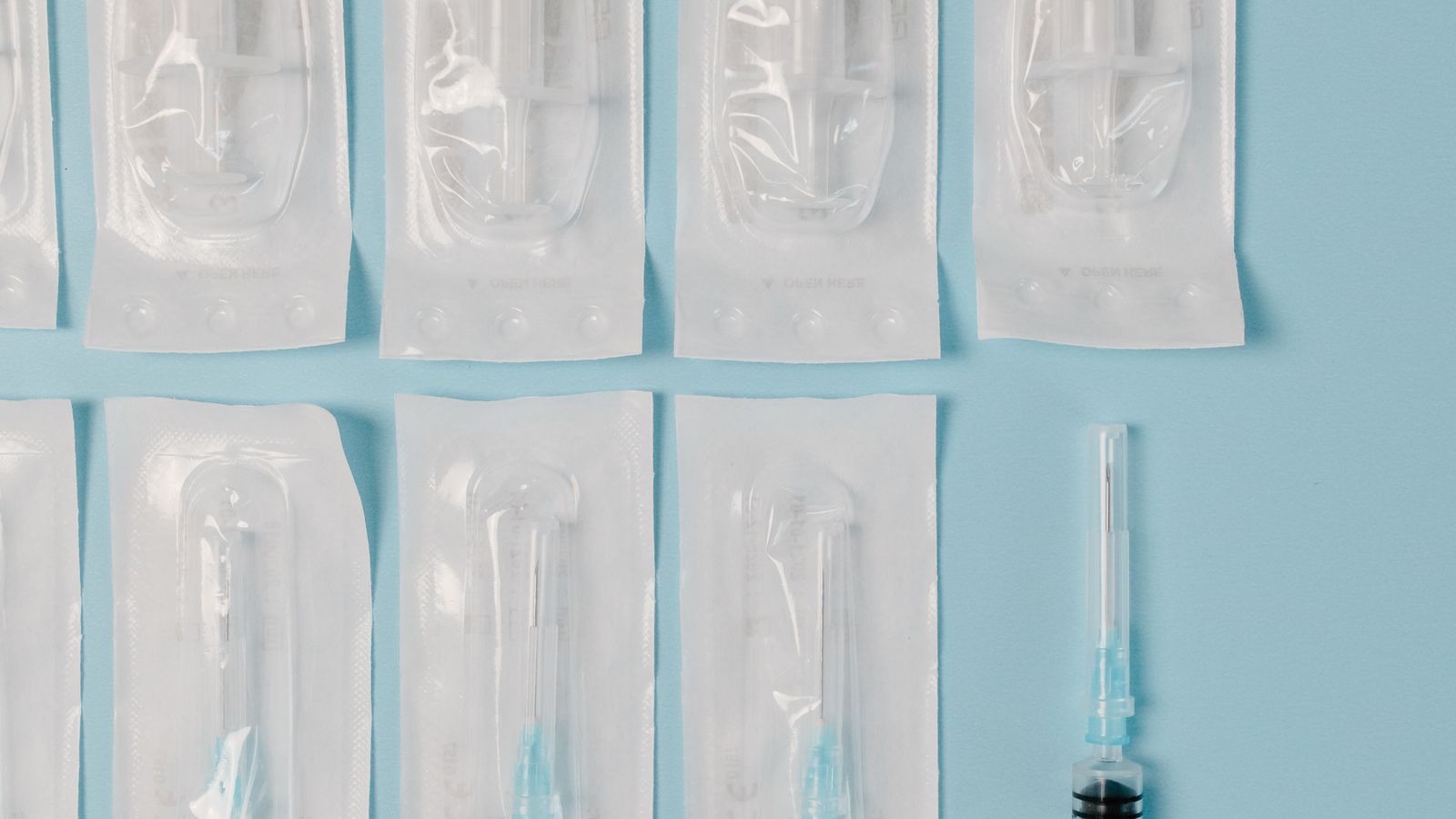
Why Lyophilized Peptides Cost More Than Liquid
Why lyophilized peptides cost more than liquid forms in most catalogues, from freeze-drying overhead to shelf-life stability and shipping requirements.
Reviewed by Benjamin Clark, MD, internal medicine physician ·
Benjamin Clark, MD is a board-certified internal medicine physician with clinical and academic training in evidence-based pharmacotherapy at Vanderbilt University Medical Center.
- cost
- lyophilization
- storage
- peptides
Lyophilized peptides cost more than liquid because the freeze-drying process itself adds equipment time, packaging, and stability testing that a pre-mixed solution skips entirely. When a listing shows a lyophilized vial priced above an otherwise identical liquid vial of the same compound and quantity, that gap is usually traceable to processing overhead rather than the raw peptide itself.
What Lyophilization Actually Adds to a Vial
Lyophilization, commonly called freeze-drying, removes water from a peptide solution under vacuum at low temperature, leaving behind a dry powder or cake inside the vial. The process runs in specialized freeze-dryers that cycle through freezing, primary drying, and secondary drying stages, each taking hours. A liquid-fill line, by comparison, mixes the peptide into a stable buffer and caps the vial in a single continuous pass.
Every stage of freeze-drying adds cost that eventually shows up on a price list:
- Freeze-dryer chamber time is billed per batch, and a full lyophilization cycle can run considerably longer than a liquid fill.
- The dry cake requires a sealed, often nitrogen-flushed vial to prevent moisture reabsorption, which adds a packaging step.
- Lyophilized product typically carries its own stability documentation, since dry and liquid forms degrade at different rates and need separate testing.
None of this changes the peptide sequence being sold. It changes how many labor-hours and equipment-hours went into the vial before it reached a shelf.
Stability Is the Other Half of the Price
The reason suppliers freeze-dry peptides in the first place, despite the added cost, is shelf stability. A liquid peptide solution begins degrading from the moment it is mixed, and that degradation accelerates with heat and time. A lyophilized powder is far more stable at room temperature and can typically be held in that dry state for a much longer window before reconstitution than an equivalent liquid product could be stored once mixed.
That stability difference matters commercially. A liquid-form product has a shorter usable shelf life, which means a supplier either sells it faster, discounts it as it ages, or accepts higher spoilage and write-off costs. Those costs get absorbed somewhere in the catalogue pricing. Lyophilized stock sits longer without degrading, which reduces waste for the seller but shifts more of the processing cost onto the price of the vial itself, since freeze-drying is what earned that longer shelf life.
Shipping plays a role too. A freeze-dried vial tolerates brief temperature excursions during transit far better than a liquid one does, so lyophilized listings often skip or reduce cold-chain packaging requirements. A liquid-form listing, if it exists at all for a given compound, more frequently specifies insulated or expedited shipping, and that shipping line item is sometimes bundled into the unit price rather than broken out separately.
Comparing the Cost Structure Side by Side
| Factor | Lyophilized | Liquid (pre-mixed) |
|---|---|---|
| Processing step | Freeze-drying cycle (hours) | Single-pass fill |
| Typical room-temp shelf life | Longer | Shorter |
| Shipping requirements | Standard, rarely cold-chain | Often insulated or expedited |
| Buyer prep step | Reconstitution required | None |
| Spoilage risk to seller | Lower | Higher |
| Listed price per mg | Usually higher | Usually lower where available |
The table reflects general catalogue patterns, not a fixed rule for every listing. Some sellers price liquid product at a premium instead, especially when it is a smaller batch or a convenience-focused offering. The underlying driver is always which side, seller or buyer, absorbs the reconstitution step and the degradation risk.
Working Through a Per-Milligram Comparison
Cost-per-milligram comparisons only make sense once both listings are converted to the same units, since lyophilized vials are priced by total peptide content while some liquid listings quote a concentration instead.
Suppose a catalogue lists a 5 mg lyophilized vial of a compound at $85, and a liquid-form version of the same compound at $70 for a vial already mixed to 5 mg per 2 mL.
For the lyophilized vial: $85 ÷ 5 mg = $17.00 per mg.
For the liquid vial: $70 ÷ 5 mg = $14.00 per mg.
The liquid version is $3.00 per mg cheaper in this example, a difference of about 18% relative to the lyophilized price ($3.00 ÷ $17.00). That gap is consistent with the added freeze-drying overhead discussed above, though the actual spread varies by supplier and by how much of the shipping and stability cost each seller folds into the unit price rather than listing separately. A reader tracking these differences across a full catalogue benefits from a consistent reference table rather than checking each listing individually, which is the kind of comparison a site like this one is built to hold in one place.
Once a lyophilized vial is reconstituted, the math shifts to concentration rather than total content. Adding 2 mL of bacteriostatic water to that same 5 mg vial gives a concentration of 5 mg ÷ 2 mL = 2.5 mg/mL, which converts to 0.25 mg per 10-unit mark on a U-100 insulin syringe (2.5 mg/mL ÷ 100 units/mL × 10 units = 0.25 mg). That reconstitution step, and the bacteriostatic water it requires, is itself part of why lyophilized peptides cost more than liquid on a fully loaded basis: the buyer’s added supplies and time are a cost the liquid form avoids.
Why Some Compounds Are Rarely Sold Liquid at All
Not every peptide is offered in both forms. Compounds that degrade quickly in solution are frequently listed only as lyophilized, because a liquid version would have too short a usable window to be practical for a seller to stock and ship reliably. In those cases the cost comparison in this article does not apply, since there is no liquid listing to compare against. When a liquid option does exist alongside a lyophilized one, checking documentation from a HEEZ Research for both listings is the more reliable way to confirm they represent the same peptide content before comparing price, rather than assuming two listings priced differently are otherwise identical.
Summary
Lyophilized peptides cost more than liquid in most catalogues because the freeze-drying process adds real processing time, packaging, and stability testing, and because the resulting longer shelf life reduces spoilage risk for the seller. Liquid listings trade a lower price for a shorter usable window and, in some cases, added shipping requirements. Comparing the two fairly means converting both to the same per-milligram basis and accounting for what each price already includes, whether that is cold-chain shipping, reconstitution convenience, or documented stability data.